Guide
Daruma colors, and what each one means
Red came first. Gold, green, pink, white and the rest came later, and their meanings change from maker to maker. Here is how to read them, and how to choose.
The short answer
Red is the traditional Daruma color and stands for good fortune. Other colors came later, and their meanings vary by maker and region. Common ones are gold or yellow for wealth, pink for love, purple for health and long life, black for business, blue for winning in sport, and green for health or a strong will. Choose the color that matches the goal, or the person you are giving it to.
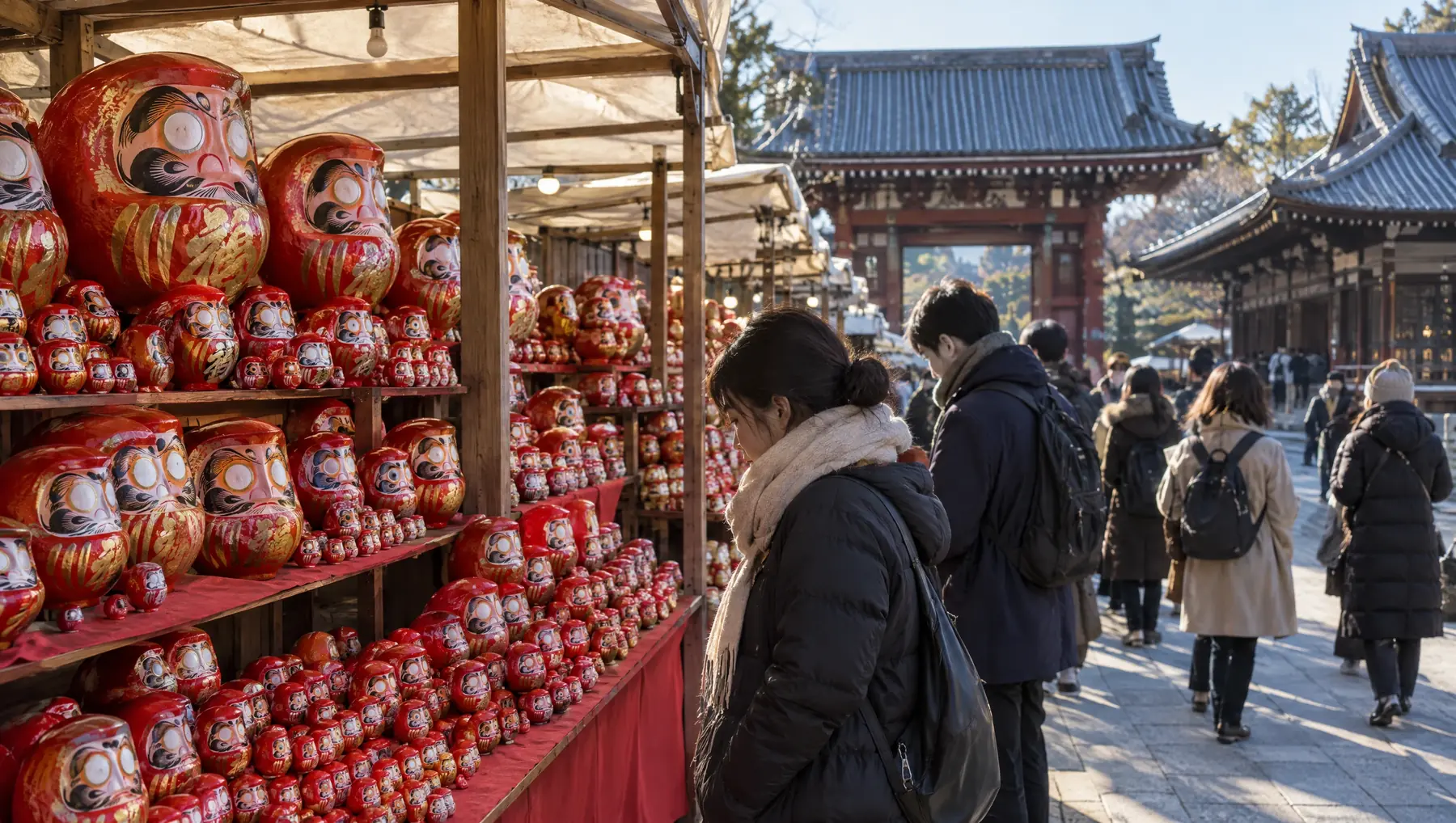
If you have only ever seen one Daruma, it was almost certainly red. Walk past a Daruma stall at a New Year temple market and the shelves are a wall of it, tier after tier of round red bodies with blank white eyes. Red is still, by a long way, the most common color.
Look more closely and you start to see others. A shelf of gold. A few pink ones. Green, purple, black, white. Each one, the seller will tell you, is for a different kind of wish. This guide explains what the colors usually mean, why they don't always mean the same thing, and how to pick the right one.
Why are Daruma red?
Red is the original Daruma color and stands for good fortune. Nobody is completely sure where it came from. The most common explanation is the red of a Buddhist priest's robe, since the doll is a portrait of the monk Bodhidharma.
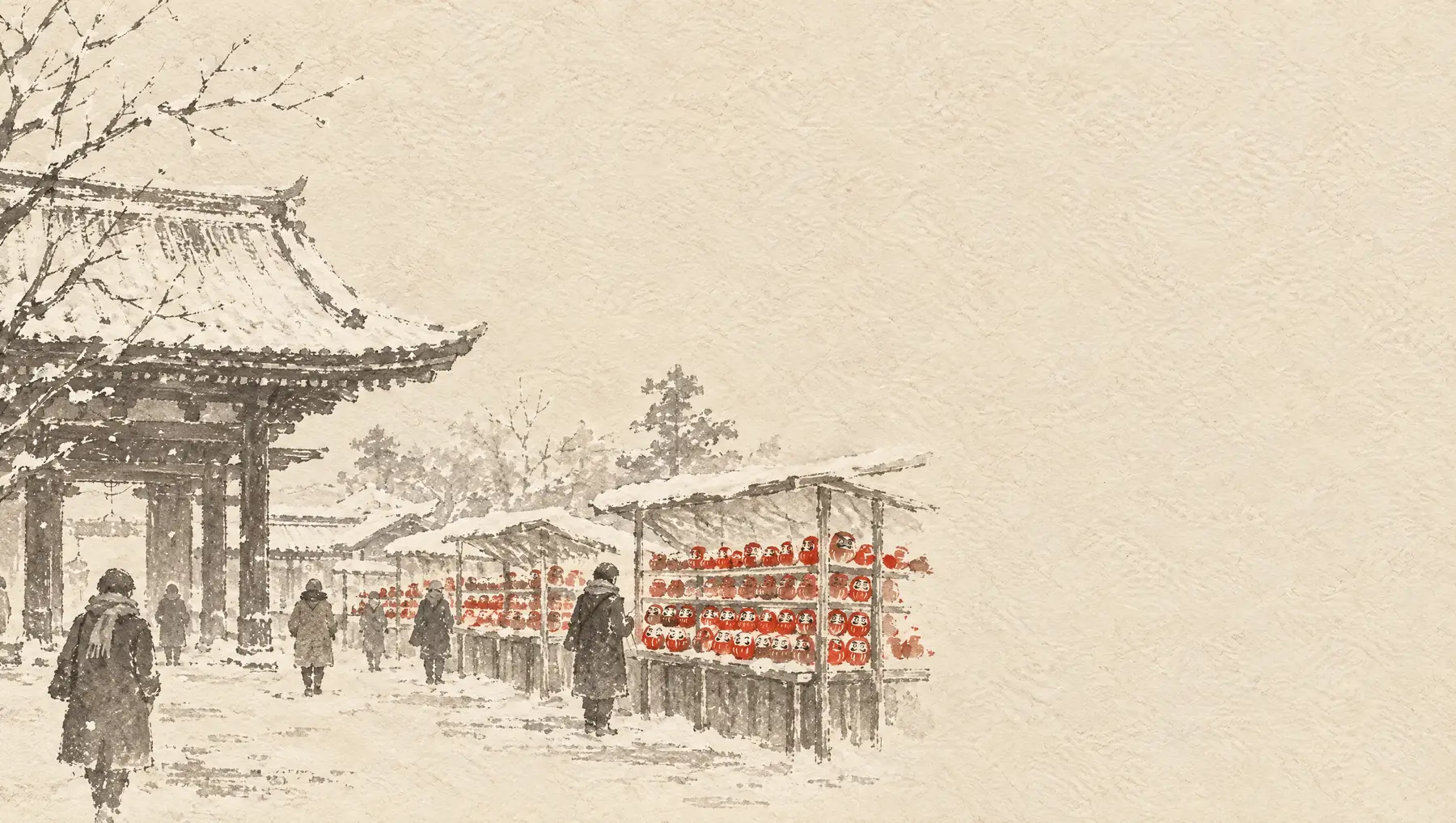
There is also a darker reason red took hold. In the late Edo period, red was associated with smallpox, and people believed the color could please the smallpox god and keep the illness away. A red Daruma, which always stands back up, became a wish for recovery as much as for luck.
A guide to Daruma colors and meanings
Meanings vary between makers, but these are the most common. Use the table as a starting point, not a rule.
| Color | Usual meaning | Worth knowing |
|---|---|---|
| Red | Good fortune | The original and most common color. Works for any goal. |
| Gold | Wealth and prosperity | Often treated the same as yellow. |
| Yellow | Wealth and prosperity | Shares its meaning with gold in most guides. |
| Pink | Love | Relationships, family, the people you are doing it for. |
| Purple | Health and long life | |
| Black | Success in business | |
| Blue | Winning in sport and competition | Some makers use it for study instead. |
| Green | Health, or a strong will | Gunma's own tourism guide says a strong will. Many shops say health. |
| White | Harmony, love or happiness | Varies the most from maker to maker. |
Why the variation? Because only red is truly traditional. The other colors are newer, and each workshop or shop settled on its own set of meanings. Even in Gunma, the home of the modern Daruma, guides note that many colors carry meanings that "may vary."
There is also an older idea of five colors together. Goshiki, meaning five colors, is a traditional Daruma set in blue, yellow, red, white and black. It is a different palette from the one most shops sell today.
The five colors we chose, and what they mean to us
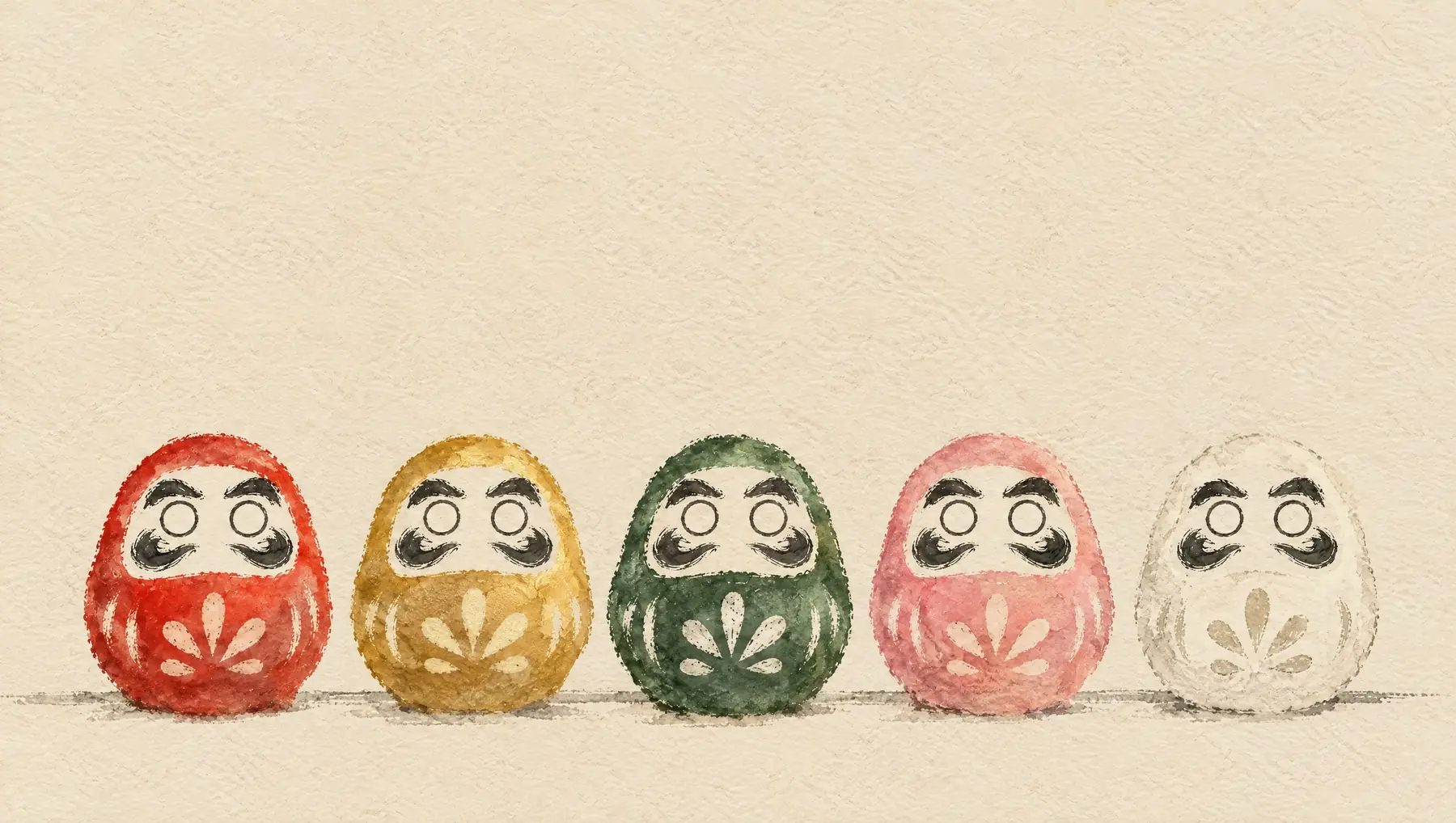
Our Daruma come in five colors, each with one clear wish, following the Japanese shop guide we worked from. Together they cover the five kinds of goal people bring to a Daruma most often.
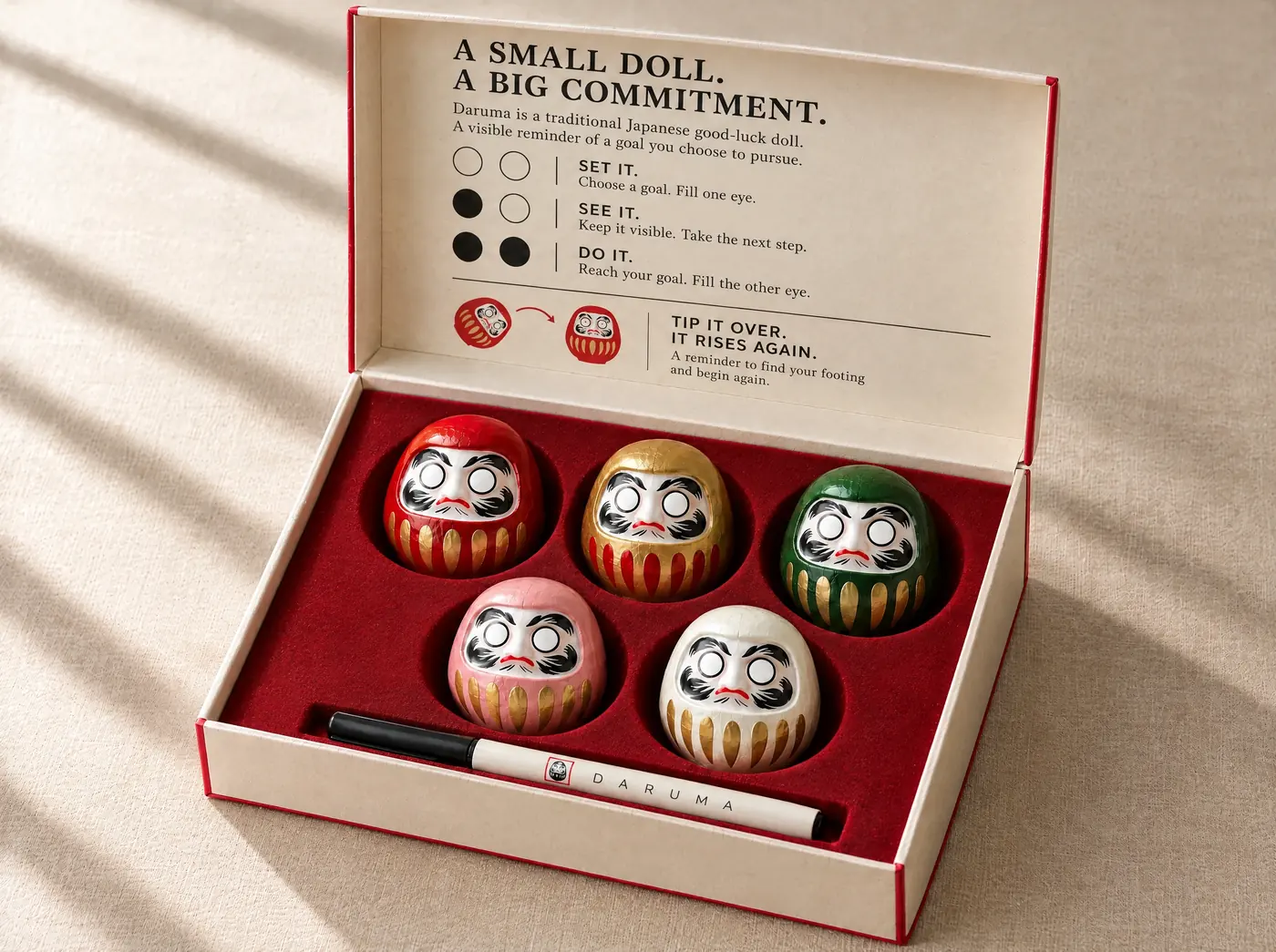
- Red, 福, good fortune. The original. Takes on any goal you put in front of it.
- Gold, 富, prosperity. For goals that come with a number attached.
- Green, 健, wellbeing. For your body, and the habits that look after it.
- Pink, 愛, love. For the people you are doing it for. Or doing it with.
- White, 幸, happiness. For goals you measure in good days.
The kanji on each doll is its wish. Our meanings sit within the common range above, but another maker may use a different one, and both are fine. A Daruma's meaning is the goal you give it.
How to choose a Daruma color
Start with the goal, not the color. Write the goal down first, then pick the color whose meaning is closest. If nothing fits, choose red.
- A money goal, a new business, a raise: gold.
- A health goal, a training plan, a habit: green.
- A relationship, a family goal, someone you love: pink.
- A good year, a calmer life, more good days: white.
- Anything else, or several things at once: red.
For a gift, choose for the person, not for yourself. Our gift guide has ideas by occasion.
Can you mix colors?
Yes. Plenty of people keep two or three Daruma at once, one for each goal, each in its own color. It is a simple way to see at a glance which goals are moving. The Full Set has all five, one of each. The Pair takes any two colors, the same one twice included.
Whatever the color, the ritual is the same: one goal, one eye, and the second eye when you get there. Here is how to use a Daruma, step by step.
Questions
What does a red Daruma mean?
Red is the original Daruma color and stands for good fortune in general. It is still the most common color and works for any goal.
What does a gold Daruma mean?
Gold, like yellow, usually stands for wealth and prosperity. People choose it for money goals, a new business or a career step.
Do Daruma colors mean the same thing everywhere?
No. Red is consistent, but the meanings of other colors vary between makers and regions. Green, white and blue have the widest range of meanings.
What is a goshiki Daruma?
Goshiki means five colors. A goshiki Daruma set traditionally comes in blue, yellow, red, white and black.
Which Daruma color should I choose?
Match the color to the goal if one fits, for example pink for a relationship or gold for a money goal. If you are unsure, choose red. It covers everything.
Sources
- Takasaki Daruma, a Gunma icon, Visit Gunma
- Daruma doll, Wikipedia
Written by The Orunoki team. We check every fact against the sources above and update the article when we learn more. Last updated .